GMG Upcoming Events
- >> Click here for upcoming event details! <<
- LOOK!11/23: Piper's Creek Salmon Run, 2pm, Carkeek Park
- WOW!11/30: Amazing Vitality Secrets from Our 95-Year-Old Neighbor, 2pm, GSC
- 12/1 (Tuesday): Breakfast Group, 9:30am
- 12/1 (Tuesday): Planning Group Meeting, 2pm, GSC
- 12/7: Pickleball, 2pm, LHCC
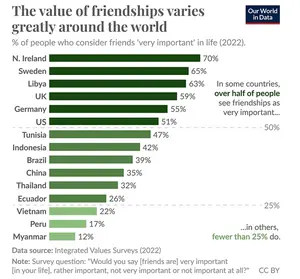
- 12/14: Elderhood Discussion - "Loneliness & Friendship", 2pm, GSC
- 12/21: Bocce Ball, 1:30pm, WPLBC
- 12/28: Special Movie, 2pm, GSC
- NEW! 1/11: Storytelling with John Berks, 2pm, GSC
- Other possible events for 2026-2027
- Missed an event? Find out what happened here!
Improve Your Beliefs, Live Longer
As a senior man, do you believe that you could live several years longer than the average person? And be sharper and healthier, too?
Quite possibly you can, according to a 12-year study of 11,000 older Americans over age 65. The researchers tracked changes in cognition using a global performance assessment, and physical function using walking speed -- considered by geriatricians as a "vital sign” because of its links to disability, hospitalization, and mortality.
Results of the study showed that 45% of individuals improved in at least one of the two health domains. About 32% improved cognitively, 28% improved physically, and many experienced gains that were clinically meaningful. When participants whose cognitive scores remained stable over that period (rather than declining) were included, more than half of the entire group defied the stereotype of inevitable deterioration in cognition.
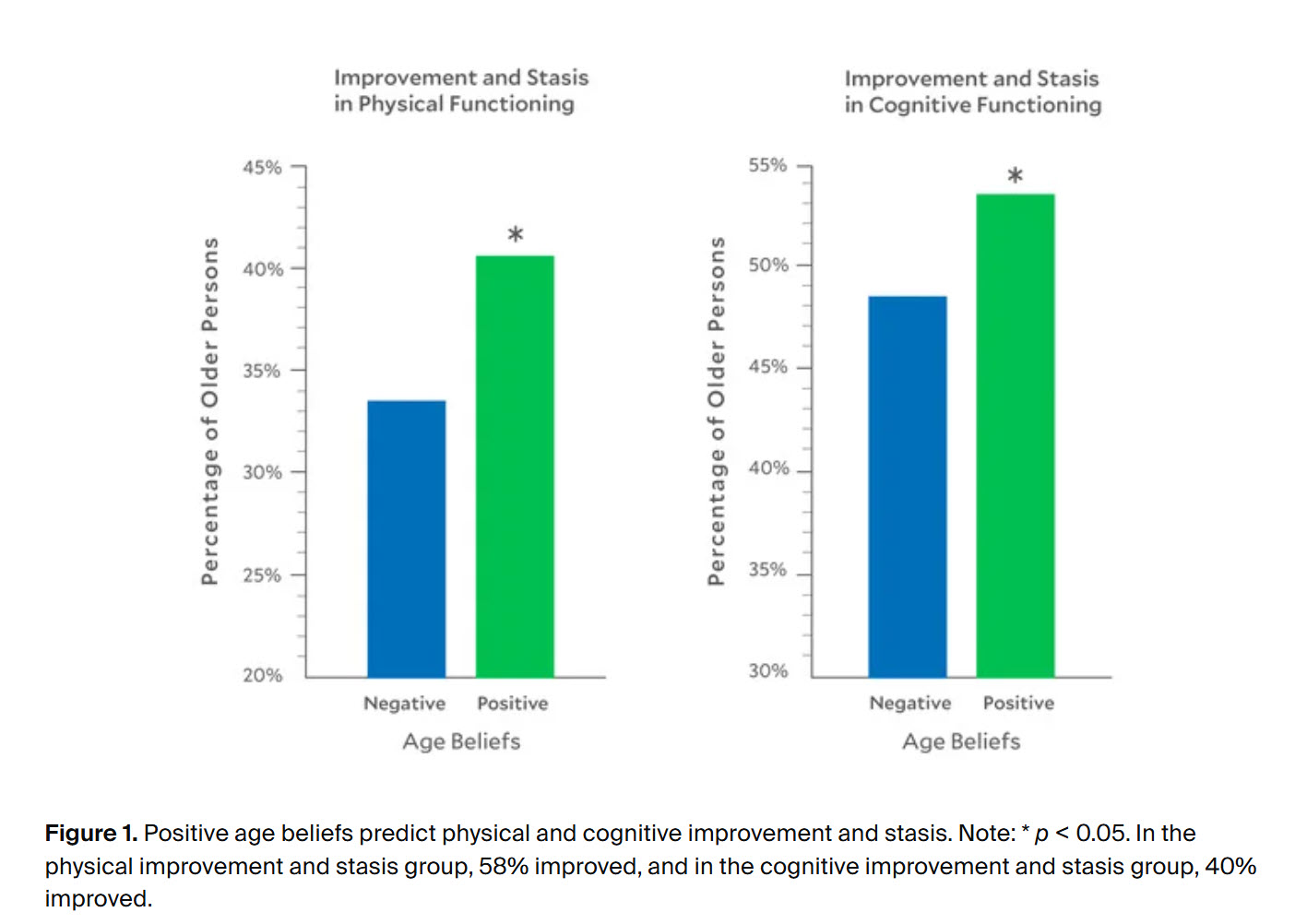 Positive age beliefs (green bars) predict physical and cognitive improvement and stasis
In other words, the study clearly showed those who had a positive outlook towards their aging were more likely to have improved physical and cognitive functioning versus those who had a negative outlook.
"We discovered that 45% of the participants, who were 65 years and older, showed improvement in cognitive and/or physical function over a period of up to 12 years from baseline."
How Beliefs Might Affect the Mental and Physical Health of Seniors
In an earlier study, the researchers previously indicated that the brain, which governs much of health, is susceptible to the influence of your beliefs about age. Specifically, they said negative beliefs were associated with biomarkers of Alzheimer's disease (i.e., accumulation of plaques and tangles, together with lower hippocampal volume).
They hope that future research will determine whether positive age beliefs may increase the rate at which brain neurons generate new connections in later life, and contribute to the later-life regeneration of satellite cells in muscles.
Researcher's Conclusions - Implications for Senior Men
"By demonstrating that health improvement occurred in a meaningful percentage of our sample, we debunked the age belief that later life is a time of inevitable and universal decline.
In doing so, a basis is provided for raising some older persons’ expectations about their health, which might increase their self-efficacy, which could lead to greater engagement in health behaviors (that otherwise suffer from fatalism), which could contribute to further health improvement.
It would be accurate and beneficial to expand the prevailing definition of aging so that it includes the possibility of health improvement."
Time to Examine Your Beliefs about Aging? And Make a Few Changes?
Have you heard the old saying, "You become what you think about"? Well, there is medical research evidence to indicate this may be true with regard to your health and longevity.
Here's what you can do about it.
1. Identify and Evaluate Your Beliefs. Take a few moments to identify and list your positive and negative beliefs about your aging process. For example, question assumptions such as "The older I get, the more useless I feel". Also, ask yourself probing questions such as "Am I as happy now as I was when I was younger?"
2. Reframe Negative Thoughts. Have you ever wanted to try something new, then thought, “No, I’m too old?” Or doubted your ability to improve or contribute? Challenge those thoughts when they arise. Remind yourself that growth and purpose are possible at any age. See if you can develop habits that reinforce your positive beliefs and help you avoid falling into negativity.
3. Create Positive Beliefs Through Action. You can create a more positive outlook on aging by staying active, connected and engaged. See below for some ideas on how to proceed.
12 Ways to Develop a Positive Mindset -- and Promote Longevity
1. Develop a sense of purpose. Have a clear reason to get up in the morning -- hobbies, volunteering, mentoring, or caring for family. This correlates with life satisfaction and resilience.
2. Be adaptable and accepting. Practice psychological flexibility -- acceptance of physical or cognitive changes you can't control while focusing energy on what you can control. This reduces stress and improves well-being.
3. Be grateful and optimistic. Regularly focus on past achievements, current joys, and positive expectations for the future.This reduces age-related anxieties.
4. Pursue lifelong learning. Engage in new skills, classes, or intellectually stimulating activities. This reinforces a growth mindset and demonstrates that personal development does not stop with age.
5. Be involved with support networks. Promote close, meaningful relationships with family, friends, and neighbors. This provides emotional security and reduce feelings of isolation.
6. Engage with younger generations. Spend time with younger people (grandchildren, mentees, or younger community members). This fosters mutual learning, keeps you connected to evolving culture, and reinforces your value as mentor.
7. Be involved with your community. Participate in clubs, faith groups, or neighborhood organizations such as the Greenwood Men's Group. This creates a sense of belonging and shared identity.
8. Maintain independence. Your ability to make daily choices about your living situation, schedule, and activities is a strong predictor of a positive outlook.
9. Proactively develop healthy habits. Regular physical movement, optimized nutrition, and preventative care improve energy levels and mood thus creating a positive feedback loop between physical vitality and mental outlook.
10. Challenge ageist stereotypes. Reject negative societal narratives (such as the idea that aging equals inevitable decline or irrelevance). This leads to better cognitive and physical outcomes.
11. Look for positive role models. Notice peers and public figures who age actively and creatively. Maybe you could do the same. This reshapes your expectations of what later life can look like.
12. Find an age-friendly environment. Live in accessible, safe, and walkable communities with reliable transportation. This makes it easier to stay socially and physically active.
And let's remember…stinkin' thinkin' will undermine your health and shorten your life. Happier days ahead!
You might like these
How to Remove Bias and Noise from Your Decision-Making
How do you make the best decision in the midst of bias and noise in your environment? Learn more here.
Storytelling helps senior men understand their world
Older men enjoy telling stores and hearing stories of others, including mythic tales
How to Improve Your Habits to Increase Life Satisfaction
Seattle senior men advocate working better habits. It can change your life.
Ancient blueprint for a happy life
Epicurus says highest human pleasure is friendship
Older Men's Life Issues. Let's Solve Them Together
Seattle Senior Men deal with life-changing issues.
Do older men matter to anyone?
Men matter if they feel important, valued and needed by others




The mission of of seattleseniormen.com and greenwoodmensgroup.com is to provide a supportive environment where men from diverse backgrounds can foster camaraderie, develop friendships, share wisdom, enrich one another's lives -- and contribute to all Seattle communities, including Greenwood, Ballard, Crown Hill, Fremont, Green Lake, Licton Springs, Loyal Heights, Magnolia, Phinney Ridge, Ravenna, Sunset Hill, Wallingford, Wedgwood, Whittier Heights. Bitter Lake, Broadview, Haller Lake, Queen Anne, and beyond.
Recent Articles


-
Senior men improve cognition and health with positive aging beliefs
Nov 21, 26 11:00 PM
Having a positive outlook leads to better cognition and physical health in older men -
Curmudgeon's Cave - Greenwood Men's Group Member Speaks Out
Nov 17, 26 08:18 PM
Observations and Opinions from a Greenwood Men's Group member -
How Aging Fat Cells Raise Disease Risk for Senior Men
Nov 07, 26 10:16 PM
Learn why aging fat cells become dysfunctional in overweight senior men, driving insulin resistance and metabolic disease as fat storage capacity declines.