GMG Upcoming Events
- >> Click here for upcoming event details! <<
- 9/21: Bocce Ball, 2pm, WPLBC
- 9/28: Build Tiny Houses, 9am-2pm
- 10/5: Pickleball/Cornhole, 2pm, LHCC
- 10/6 (Tuesday): Breakfast Group, 9:30am, Pacha Cafe
- 10/6 (Tuesday): Planning Group Meeting, 2pm, GSC
- 10/12: Elderhood: "Joy, Curiosity and Growth", 2pm, GSC
- 10/19: Bocce ball, 2pm, WPLBC
- 10/26: Murder Mystery Game program, 2pm, GSC
- 11/2: Pickleball, 2pm, LHCC
- 11/3 (Tuesday): Breakfast Group, 9:30am, Serendipity Cafe
- 11/9: Piper's Creek Salmon Run, 2pm, Carkeek Park
- 11/16: Bocce Ball, 2pm, WPLBC
- 11/23: Amazing Vitality Secrets from Our 95-Year-Old Neighbor, 2pm, GSC
- 11/30: "Show & Tell", 2pm, GSC
- 12/3 (Thursday): Elderhood - Loss & Grief, 2pm, GSC
- 12/7: Pickleball, 2pm, LHCC
- 12/14: "Senior Olympics", 2pm, GSC
- 12/21: Bocce Ball, 2pm, WPLBC
- 12/28: Special Movie, 2pm, GSC
- Other possible events for 2026-2027
Missed an event? Find out what happened here!
Priorities and Concerns of Older Men
You aren't the man you used to be when you were 35 years old.
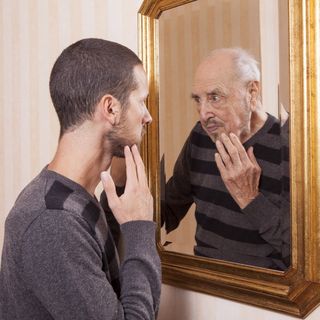
Now that you're perhaps at least 65 years old, how have your priorities and concerns changed over the years?
Here's a roundup of medical research about your concerns as you grow older. Do the priorities of other men look similar to yours?
According to medical research, men over 65 are primarily concerned with preserving functional independence, maintaining physical and sexual function, and sustaining social connectedness.
Yet the health issues they prioritize most are often those least addressed by clinical services.
 ["Doc, I don't think you really understand me."]
Men over 70 consistently rank functional health -- mobility, memory, and continence -- among their greatest concerns, while discounting physical appearance as unimportant. Sustaining independence, close relationships, and the ability to remain socially and physically active emerge as the most important priorities
The healthcare system's mismatch between men's priorities and the services actually offered underscores the need for increased attention to the health of older men.
Health and Functional Concerns
In a survey of 2,325 community-dwelling men aged 55–97, the top health concerns were mobility impairment (64%), memory loss (64%), and medication side effects (63%).
Yet there is a disconnect between older men and our "health care" system. These functional and quality-of-life issues -- incontinence, osteoporosis, mobility, falls, anxiety, memory loss, and depression -- received the lowest screening and counseling rates from health professionals, creating a paradox between what matters most to older men and what the healthcare system addresses.
Urinary symptoms also had a high impact on quality of life, worsened by environmental constraints such as toilet availability.
The importance of health increased from midlife onward, even as satisfaction with health declined.
Appearance No Longer Important to Senior Men
Research indicates older men disparage appearance as an unimportant, feminized concern, emphasizing instead the salience of body functionality and health. Weight was a prominent exception -- men worry about their weight, particularly stomach size, and stay physically active to manage it.
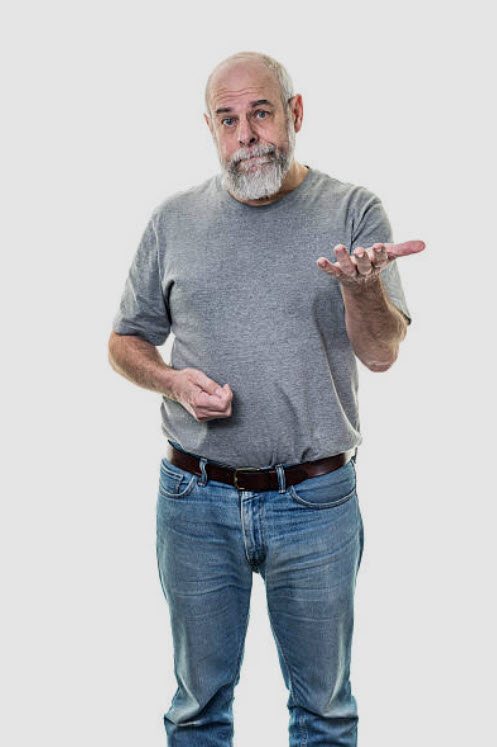 I don't care what you think. This is ME.
So apparently it's really OK to buy your shirts at Costco and wear white socks while walking around Green Lake.
Independence, Social Connection, and Belonging
Sustaining independence -- anchored by financial resources and good health -- is a core theme among oldest-old men, who describe themselves as active agents maintaining meaning and life satisfaction. Belongingness, including close relationships, established friendships, and the significance of a spouse, is equally central to their well-being.
Social connectedness prevents loneliness and social isolation while improving well-being and reducing physical and mental health risks. Older men who live with a partner are less lonely than women living together, but previously married men who now live alone are lonelier than their female counterparts.
Men's poorer-quality friendships partially explains their greater dependency on partners and reluctance to directly state loneliness. (Groups like the Greenwood Men's Group are intended to solve this problem by creating high-quality friendships among men.)
Masculinity, Identity, and Seeking Help
Did you ever consider yourself as a Tough Guy or a He-Man?
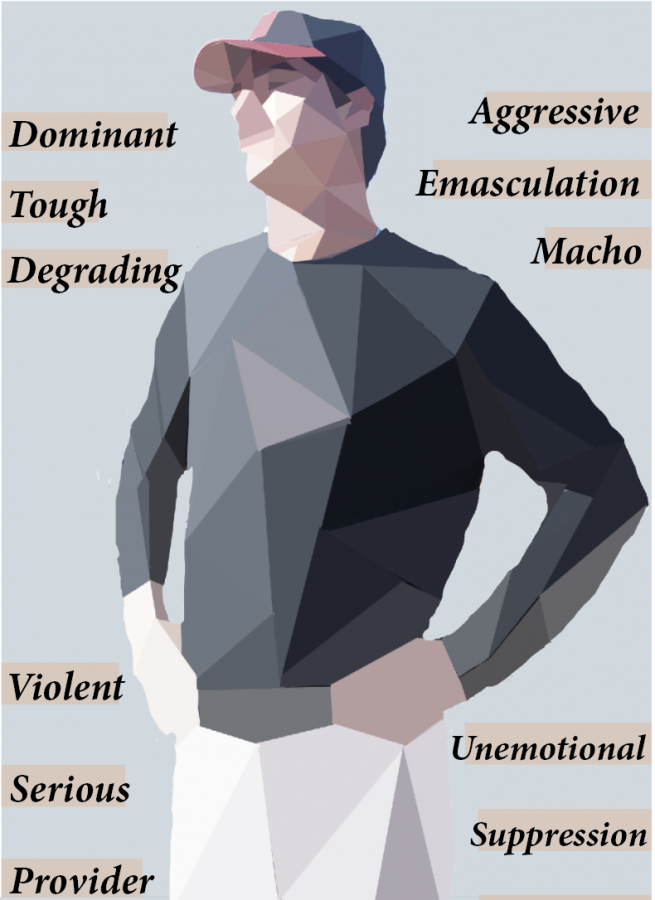
Even if you did, hopefully you have transitioned away from that version of masculinity long ago.
Traditional masculine norms emphasizing independence, self-reliance, and imperviousness to illness remain salient well into late life and shape how older men approach health.
Illness and help-seeking are often perceived as threats to masculine identity, with men taking action for health only when their status jeopardizes independence. Men aged 70 and older do engage more frequently in health behaviors like annual exams and nutritious eating than younger men, yet both age groups rarely seek help for emotional problems.
- Stoicism, reluctance to discuss health problems, and poor doctor relationships are barriers to health action.
- Some men view health care and preventative practices as feminine pursuits and delegate decisions to spouses.
- Group health programs are perceived as feminine by nearly 78% of program coordinators, which deters male participation.
- Older men prefer problem-solving and physical activity over group exercise or workshop-style interventions.
Stoicism and reluctance to discuss personal matters are barriers to social support and health action.
Men consider retirement a particularly critical life event that could trigger psychological instability and depression.
Men are four times more likely than women to die by suicide, and endorsement of traditional "hegemonic masculinity" ideals is positively associated with both depressive and anger symptoms. This association strengthens when men perceive their health to be declining or have lost wealth.
Hegemonic masculinity is a concept that emphasizes:
- Emotional suppression: Practicing stoicism and refusing to show vulnerability, empathy, or sadness.
- Power and control: Displaying dominance in social, financial, and interpersonal dynamics.
- Physical strength and aggression: Relying on physical prowess, toughness, and sometimes violence to maintain status.
- Heteronormativity: Viewing exclusive heterosexuality and sexual conquest as essential to manhood.
- Socioeconomic status: Being the primary breadwinner, holding high-power jobs, or wielding financial authority.
This is the type of masculinity that will reduce life satisfaction in addition to making life shorter.
Musculoskeletal and Functional Limitations
Arthritis and rheumatism is a leading self-perceived health problem causing functional limitations in men aged 60 and older. More than one of every two men report this problem.
In survey data, mobility impairment was the single greatest concern, reported by 64% of older men.
Back and neck problems are also common functional limitations.
As you get older, your ability to function decreases. According to one study, the predicted number of health problems causing functional difficulties was 1.81 times higher in men aged 80 and older compared to those aged 60.
Urological and Sexual Health -- and Intimacy
As you go through your day, do you ever wonder: "where is the nearest toilet?"
- Benign prostatic hyperplasia (BPH) ranks fourth among the ten leading diagnosed disorders in men over 50.
- Prostate cancer is a near-universal concern among older men, expressed even by those at low risk.
- Erectile dysfunction and sexual dysfunction prevalence sharply increases with age, alongside BPH and prostate cancer.
- Only a small minority (17%-38%) of men over age 65 discuss their sexual health with a provider.
- Urinary symptoms have a high impact on quality of life, worsened by environmental constraints such as toilet availability.
In spite of these problems, intimacy and bonding -- rather than purely functional capacity -- underpins older men's understanding of why sex remains important. Men draw on intimacy to account for continued sexual expression even in the absence of a functional erection. Sexual activity is described as the "icing on the cake" of a satisfying relationship built on companionship and emotional closeness.
Mental Health and Cognitive Decline
Memory loss is a top-tier concern for 64% of older men according to one study, on a par with mobility impairment.
Men appear to be at higher risk for mild cognitive impairment (MCI) than women, and being male is identified as a risk factor for incident MCI or dementia. Staying mentally sharp is a top concern for both men and women over 50 (71%), followed by developing Alzheimer's disease (51%).
Cardiovascular Disease?
Here's a paradox for you!
Cardiovascular disease (CVD) is not a dominant perceived concern of men over 65, even though it remains their leading actual health threat. The evidence consistently shows that older men underestimate personal CVD risk while acknowledging its severity, with functional and quality-of-life issues taking priority in their health concerns.
We hope you're at least paying attention to your blood pressure. Hypertension affects 71% of men aged 65–74 and 80% of men over 75, making it the most prevalent modifiable CVD risk factor.
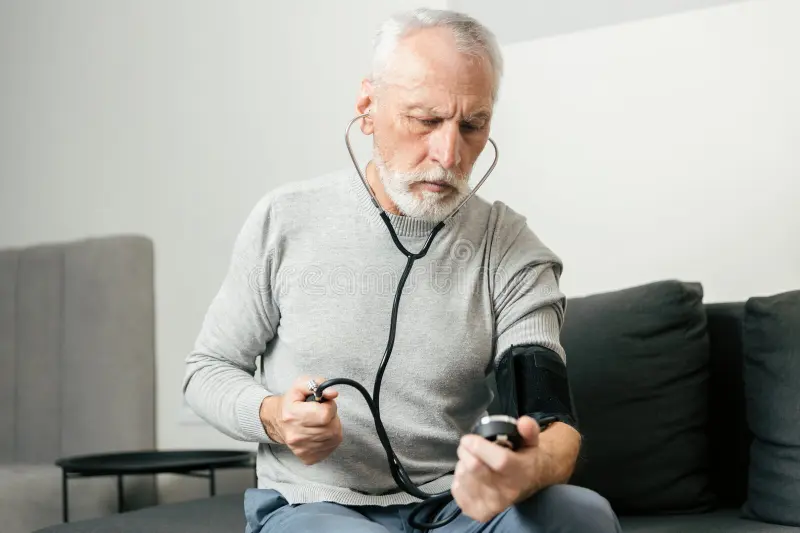 How's your blood pressure?
Summary
The concerns listed above are what your peers are thinking about. How about you? How are you responding to these concerns?
References
- Tannenbaum C. Effect of age, education and health status on community dwelling older men’s health concerns. The Aging Male. 2012;15:103 - 108. doi:10.3109/13685538.2011.626819
- Hurd L, Mahal R. “I’m Pleased with My Body”: Older Men’s Perceptions and Experiences of Their Aging Bodies. Men and Masculinities. 2019;24:228 - 244. doi:10.1177/1097184x19879188
- Carstensen G, Rosberg B, Kee KMJ, Åberg A. Before evening falls: Perspectives of a good old age and healthy ageing among oldest-old Swedish men.. Archives of gerontology and geriatrics. 2019;82:35-44. doi:10.1016/j.archger.2019.01.002
- Pereira H, Silva P, Della Torre R, et al. Men’s Social Connectedness in Later Life: A Qualitative Study with Older Men. Geriatrics. 2024;9. doi:10.3390/geriatrics9020053
- Pinnock C, O'Brien B, Marshall VR. Older men?s concerns about their urological health: a qualitative study. Australian and New Zealand Journal of Public Health. 1998;22. doi:10.1111/j.1467-842x.1998.tb01393.x
- Bennett E, Hurd L, Pritchard E, Colton TMS, Crocker P. An examination of older men's body image: How men 65 years and older perceive, experience, and cope with their aging bodies.. Body image. 2020;34:27-37. doi:10.1016/j.bodyim.2020.04.005
- Beutel M, Glaesmer H, Wiltink J, Marian H, Brähler E. Life satisfaction, anxiety, depression and resilience across the life span of men. The Aging Male. 2010;13:32 - 39. doi:10.3109/13685530903296698
- Ratcliffe J, Galdas P, Kanaan M. Older men and loneliness: a cross-sectional study of sex differences in the English Longitudinal Study of Ageing. BMC Public Health. 2024;24. doi:10.1186/s12889-024-17892-5
- Schladitz K, Förster F, Wagner M, et al. Gender Specifics of Healthy Ageing in Older Age as Seen by Women and Men (70+): A Focus Group Study. International Journal of Environmental Research and Public Health. 2022;19. doi:10.3390/ijerph19053137
- Helgason Á, Adolfsson J, Dickman P, et al. Sexual desire, erection, orgasm and ejaculatory functions and their importance to elderly Swedish men: a population-based study.. Age and ageing. 1996;25 4:285-91. doi:10.1093/ageing/25.4.285
- Fileborn B, Hinchliff S, Lyons A, et al. The Importance of Sex and the Meaning of Sex and Sexual Pleasure for Men Aged 60 and Older Who Engage in Heterosexual Relationships: Findings from a Qualitative Interview Study. Archives of Sexual Behavior. 2017;46:2097 - 2110. doi:10.1007/s10508-016-0918-9
- Towler L, Graham C, Bishop F, Hinchliff S. Sex and Relationships in Later Life: Older Adults’ Experiences and Perceptions of Sexual Changes. The Journal of Sex Research. 2022;60:1318 - 1331. doi:10.1080/00224499.2022.2093322
- Lee DM, Nazroo J, O'Connor D, Blake M, Pendleton N. Sexual Health and Well-being Among Older Men and Women in England: Findings from the English Longitudinal Study of Ageing. Archives of Sexual Behavior. 2015;45:133-144. doi:10.1007/s10508-014-0465-1
- Folorunsho S. Masculinity and Mental Health in Later Life in Sub‐Saharan Africa: A Review of Recent Literature. Sociology Compass. 2025. doi:10.1111/soc4.70148
- King K, Dow B, Keogh L, et al. “Is Life Worth Living?”: The Role of Masculinity in the Way Men Aged Over 80 Talk About Living, Dying, and Suicide. American Journal of Men's Health. 2020;14. doi:10.1177/1557988320966540
- Clarke HL, Lefkowich M. 'I don't really have any issue with masculinity': Older Canadian men's perceptions and experiences of embodied masculinity.. Journal of aging studies. 2018;45:18-24. doi:10.1016/j.jaging.2018.01.003
- Agochukwu-Mmonu, N., Malani, P., Wittmann, D., Kirch, M., Kullgren, J., Singer, D. C., & Solway, E. (2021). Interest in Sex and Conversations About Sexual Health with Health Care Providers Among Older U.S. Adults. Clinical Gerontologist, 44, 299 - 306. https://doi.org/10.1080/07317115.2021.1882637
- Burns, S. D., & Drentea, P. (2023). Masculine Ideals and Health in Older Men: Findings From the Wisconsin Longitudinal Study. American Journal of Men's Health, 17. https://doi.org/10.1177/15579883231220714
- Courtenay, W. (2000). Constructions of masculinity and their influence on men's well-being: a theory of gender and health.. Social science & medicine, 50 10, 1385-401. https://doi.org/10.1016/s0277-9536(99)00390-1
- Hyun, J. (2018). Vision and Strategies for Men's Health Research in an Aging Society. The World Journal of Men's Health, 36, 173 - 175. https://doi.org/10.5534/wjmh.180044
- Issa, M., Fenter, T., Black, L., Grogg, A., & Kruep, E. (2006). An assessment of the diagnosed prevalence of diseases in men 50 years of age or older.. The American journal of managed care, 12 4 Suppl, S83-9.
- Lunenfeld, B. (2002). The ageing male: demographics and challenges. World Journal of Urology, 20, 11-16. https://doi.org/10.1007/s00345-002-0250-y
- Sjöberg, E., Kochovska, S., Currow, D. C., Ekström, M., & Olsson, M. (2026). Prevalence of symptoms and their association to health-related quality of life among older men in Sweden – a cross-sectional study. BMC Geriatrics, 26. https://doi.org/10.1186/s12877-026-07152-z
- Smith, D. T., Mouzon, D. M., & Elliott, M. (2022). Hegemonic Masculinity and Mental Health Among Older White Men in the U.S.: The Role of Health and Wealth Decline. Sex Roles, 86, 605 - 619. https://doi.org/10.1007/s11199-022-01291-4
- Storz, M., Ronco, A. L., & Huber, R. (2026). Trends in self-perceived physical and mental health problems causing functional limitations in US men aged 60 years or older.. The aging male : the official journal of the International Society for the Study of the Aging Male, 29 1, 2630537. https://doi.org/10.1080/13685538.2026.2630537
- Tannenbaum, C., & Frank, B. (2011). Masculinity and Health in Late Life Men. American Journal of Men's Health, 5, 243 - 254. https://doi.org/10.1177/1557988310384609
- Thompson, E. (2008). Gender Matters: Aging Men's Health. 5.
- Langa K, Levine D. The Diagnosis and Management of Mild Cognitive Impairment: A Clinical Review. JAMA. 2014;312:2551 - 2561. doi:10.1001/jama.2014.13806
- Lipnicki D, Sachdev P, Crawford J, et al. Risk Factors for Late-Life Cognitive Decline and Variation with Age and Sex in the Sydney Memory and Ageing Study. PLoS ONE. 2013;8. doi:10.1371/journal.pone.0065841
- Smith J, Larkina M. Who is Afraid of Cognitive Decline after Age 50 and Why: Reality or Illusion?. Innovation in Aging. 2025;9. doi:10.1093/geroni/igaf122.2864
- Tannenbaum C. Effect of age, education and health status on community dwelling older men’s health concerns. The Aging Male. 2012;15:103 - 108. doi:10.3109/13685538.2011.626819
- Rodgers JL, Jones J, Bolleddu SI, et al. Cardiovascular Risks Associated with Gender and Aging. Journal of Cardiovascular Development and Disease. 2019;6. doi:10.3390/jcdd6020019
You might like these
Curmudgeon's Cave - Greenwood Men's Group Member Speaks Out
Observations and Opinions from a Greenwood Men's Group member
Small talk is important for a meaningful life in senior men
Senior men engaging in small talk increases life satisfaction
How to Improve Your Habits to Increase Life Satisfaction
Seattle senior men advocate working better habits. It can change your life.
Rituals Play a Role in Your Life and in the Seattle men's groups
Should rituals play a role in your life and in men's groups such as Greenwood?
What's your perspective on death, now that you're older?
Seattle senior men contemplate end of life
What You Can Do About Depression or Moodiness if You're an Older Man
Are men moody or depressed? Discover symptoms, risk factors and solutions.



The mission of of seattleseniormen.com and greenwoodmensgroup.com is to provide a supportive environment where men from diverse backgrounds can foster camaraderie, develop friendships, share wisdom, enrich one another's lives -- and contribute to all Seattle communities, including Greenwood, Ballard, Crown Hill, Fremont, Green Lake, Licton Springs, Loyal Heights, Magnolia, Phinney Ridge, Ravenna, Sunset Hill, Wallingford, Wedgwood, Whittier Heights. Bitter Lake, Broadview, Haller Lake, Queen Anne, and beyond.
Recent Articles


-
Senior men need to hear good news about their environment
Sep 15, 26 06:56 PM
Good news lifts the spirits and improves health of older men -
Priorities and concerns of older men
Sep 12, 26 10:55 PM
Are your health and other concerns the same as other senior men? -
Greenwood Men's Group - Upcoming Events and Activities in Seattle Area
Sep 02, 26 12:02 AM
List of upcoming events for the Greenwood Men's Group in Seattle