GMG Upcoming Events
- >> Click here for upcoming event details! <<
- 9/21: Bocce Ball, 2pm, WPLBC
- 9/28: Build Tiny Houses, 9am-2pm
- 10/5: Pickleball/Cornhole, 2pm, LHCC
- 10/6 (Tuesday): Breakfast Group, 9:30am, Pacha Cafe
- 10/6 (Tuesday): Planning Group Meeting, 2pm, GSC
- 10/12: Elderhood: "Joy, Curiosity and Growth", 2pm, GSC
- 10/19: Bocce ball, 2pm, WPLBC
- 10/26: Murder Mystery Game program, 2pm, GSC
- 11/2: Pickleball, 2pm, LHCC
- 11/3 (Tuesday): Breakfast Group, 9:30am, Serendipity Cafe
- 11/9: Piper's Creek Salmon Run, 2pm, Carkeek Park
- 11/16: Bocce Ball, 2pm, WPLBC
- 11/23: Amazing Vitality Secrets from Our 95-Year-Old Neighbor, 2pm, GSC
- 11/30: "Show & Tell", 2pm, GSC
- 12/3 (Thursday): Elderhood - Loss & Grief, 2pm, GSC
- 12/7: Pickleball, 2pm, LHCC
- 12/14: "Senior Olympics", 2pm, GSC
- 12/21: Bocce Ball, 2pm, WPLBC
- 12/28: Special Movie, 2pm, GSC
- Other possible events for 2026-2027
Missed an event? Find out what happened here!
The Profound Effect Oral Health Has on the Metabolism and Health of Senior Men
Did you know your mouth is the gateway to your health? And that, as a senior man, keeping your gums in good shape and not losing teeth is strongly correlated with better overall health, lower disease burden, and longer survival?
So, to maintain healthy gums and protect your teeth…
- Have you had your teeth cleaned by a dental hygienist within the past six months?
- Have you had x-rays and a dental exam by a dentist within the past year?
- Do you brush your teeth with an electric toothbrush at least once a day?
- Do you floss every day?
- Do you use an oral irrigator such as a Waterpik?
- Do you use a tongue scraper to remove bacteria from your tongue?
- Eating a diet very low in refined carbohydrates?
- Blood sugar levels well-controlled?
- Avoid mouthwashes containing alcohol?
- Use toothpaste and mouthwashes containing xylitol?
- Don't smoke?
Yeah, no kidding, it can seem to be a hassle to take care of your gums and teeth. Yet it's even more of a hassle to be in poor health and contend with chronic diseases and inflammation.
The Slippery Slope of Poor Oral Health
Gingivitis is a common, mild form of gum disease causing inflammation, redness, and swelling of the gingiva (gum tissue around the base of teeth). It is primarily caused by plaque (a bacterial film) buildup from poor oral hygiene. If left untreated, this early-stage gum infection can progress to serious, irreversible periodontal disease.
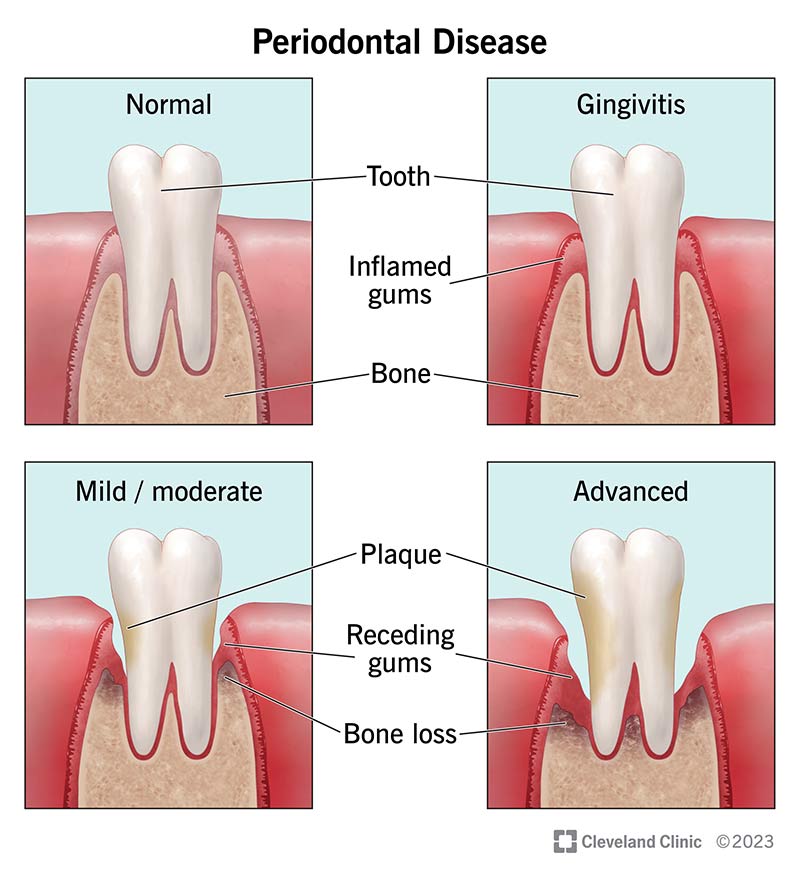
Periodontitis is a serious, chronic bacterial infection of the gums that destroys the soft tissue and bone supporting the teeth, leading to tooth loss if untreated. It stems from untreated gingivitis, where plaque hardens into tartar, creating deep, infected pockets between teeth and gums. Common symptoms include bleeding, swollen gums, bad breath, and receding gums.
The Shocking Truth about Gum Disease in Seniors
Approximately 60% to 70% of adults aged 65 and older in the United States have some form of periodontal (gum) disease, which includes gingivitis as the initial stage. Periodontal disease is generally more common in men than women, with over 50% of men affected. We hope you are not one of those who are infected.
Nearly 96% of older adults have experienced some degree of dental cavities. Men are particularly vulnerable to oral cancer.
The problem is that what starts in the mouth doesn't stay in the mouth. It's a visible indicator of your overall health and risk for disease.
Receding Gums: Sign of Early Trouble
It's estimated that about 88% of adults 65 and older have at least one site of gingival recession.
Recession is often treated as a cosmetic issue because affected teeth can appear longer or the gumline can become uneven. But the functional consequences matter more. The exposed root lacks the enamel that protects the crown of the tooth, making it more susceptible to sensitivity, wear, and root cavities. When recession is caused by periodontitis, it may also signal loss of the bone and connective tissue supporting the tooth.
The reason to catch recession early is that once gum tissue has moved away from the tooth, it does not grow back. This is one reason why you need to maintain regular visits with your dentist.
Health Researcher Drills Deep into Causes and Solutions for Gum Disease -- and How Your Health Is Affected
To gain a deeper understanding of the vital relationship between healthy gums and avoidance of metabolic diseases, you'll want to view the seminar below.
The topic: Gum disease allows oral bacteria and inflammatory signals to enter the bloodstream, driving systemic inflammation that disrupts insulin signaling and increases the risk of diabetes and cardiovascular disease. Because this relationship is bidirectional, improving oral health can meaningfully improve metabolic health and glycemic control.
Summary of Video: Most people think of gum disease as a local dental issue, but this lecture reveals a much broader and more consequential reality. Dr. Ben Bikman explains how the mouth serves as a gateway to systemic inflammation, particularly when periodontal disease allows bacteria and their toxic byproducts to enter the bloodstream. Once this happens, oral pathogens—especially P. gingivalis—can drive chronic inflammation, disrupt mitochondrial function, and contribute directly to insulin resistance.
At the mechanistic level, Dr. Bikman outlines several pathways linking oral health to metabolic dysfunction. These include cytokine spillover (where inflammatory signals interfere with insulin signaling), direct degradation of insulin receptors by bacterial enzymes, dysregulation of liver glucose metabolism, and disruption of the gut microbiome. Together, these effects create a persistent inflammatory state that impairs glucose control and increases the risk of type 2 diabetes—even in individuals without obesity.
The lecture also explores the strong epidemiological evidence supporting this connection, including studies showing that treating periodontal disease can significantly improve blood sugar control. Dr. Bikman further connects oral health to cardiovascular disease, highlighting how oral bacteria and endotoxins contribute to atherosclerosis. The takeaway is clear: oral health is not separate from metabolic health—it is a critical and often overlooked component of it.
Key Links Between Gum Health and Systemic Health
Cardiovascular disease and stroke. Periodontitis is consistently associated with higher risk of heart disease and stroke in older adults; using dental care is linked to lower incidence of both. In older individuals, periodontal disease and tooth loss are associated with higher all‑cause and cardiovascular mortality.
Chronic disease burden and inflammation. Periodontitis contributes to chronic low‑grade systemic inflammation, with bacterial products and inflammatory cytokines entering the circulation and implicated in obesity, diabetes, cardiovascular disease, rheumatoid arthritis, chronic kidney and respiratory diseases, and some cancers. Poor oral hygiene (e.g., infrequent toothbrushing) in middle‑aged and older adults is associated with higher prevalence of chronic diseases, especially cardiovascular disease and diabetes.
Nutrition, frailty, and physical function. Tooth loss and chewing problems in older people impair diet quality and increase risk of malnutrition, frailty, disability, falls, and mortality. “Oral frailty” (multiple deficits such as few teeth, poor chewing, low tongue pressure, swallowing difficulty) may double the risk of physical frailty, sarcopenia, disability, and death.
Mortality and survival in older men. In a Japanese cohort (≥65 years), having no teeth carried one of the highest hazards for death. In the British Regional Heart Study (older men 71–92), tooth loss, dry mouth, and multiple oral problems predicted higher all‑cause, cardiovascular, and respiratory mortality.
Holistic and Mental Health. Poor oral health in older adults is linked to worse quality of life, depression, cognitive impairment, and respiratory infections (e.g., aspiration pneumonia), while better oral status supports physical, mental, and social well‑being.
Why Good Oral Health Matters for Healthy Aging
Healthy gums (absence of periodontitis) mean less bacterial biofilm, less chronic inflammation, and lower risk of tooth loss. This supports better cardiovascular and metabolic profiles.
Maintaining teeth and oral function supports adequate nutrition, independence, and social interaction, all central to “healthy ageing” as defined by WHO.
Good oral health contributes to better general health status, fewer chronic conditions, improved quality of life, and possibly longer survival in older adults. It also reduces risks of frailty, disability, hospitalization, and mortality in older men.
Happy flossing!
Brush Smarter, Not Harder
Besides flossing, the most important thing you can do to maintain oral health is to brush your teeth. But "more" is not necessarily "better".
You'll want to improve how you brush. The goal is not to avoid the gumline. Plaque collects there, and leaving it alone will create a different set of problems. The goal is to clean the gumline consistently without applying unnecessary force.
Some simple habits for better brushing:
- Check your bristles. If they become flattened or splayed soon after you start using a new toothbrush, you are probably pressing too hard.
- Use a soft-bristled brush. Medium and hard bristles are rarely necessary for routine home care.
- Avoid sawing across the gumline. Use small, controlled movements rather than forceful horizontal scrubbing.
- Let an electric brush do the work. Do not press and drag it like a manual brush. A built-in pressure sensor can provide useful feedback if you have trouble judging force.
- Be gentle between the teeth. Guide floss through the contact point and curve it around each tooth instead of snapping it into the gums.
- Ask your hygienist or dentist to watch you brush. They can provide feedback based on your anatomy and concerns.
Toothpaste Selection? Mouthwash?
If you already have exposed roots or sensitivity, toothpaste selection is important. Relative Dentin Abrasivity, or RDA, describes how abrasive a toothpaste is to dentin. As a general rule, “whitening” toothpastes tend to be more abrasive, while “sensitive” options are less abrasive, though there are exceptions.
Check your toothpaste’s RDA online or ask your dentist for recommendations. Toothpastes with RDA values of 0–70 are considered minimally abrasive and may be a good option if you have existing gum recession or sensitivity.4
If you use mouthwash, alcohol-free options may be preferred because alcohol can dry the gums and increase risk of inflammation.
References
- Meyerhoefer, C., Pepper, J., Manski, R., & Moeller, J. Dental Care Use, Edentulism, and Systemic Health among Older Adults. Journal of Dental Research. 2021; 100. https://doi.org/10.1177/00220345211019018
- Lipsky, M., Singh, T., Zakeri, G., & Hung, M. Oral Health and Older Adults: A Narrative Review. Dentistry Journal. 2024; 12. https://doi.org/10.3390/dj12020030
- Nazir, M. Prevalence of periodontal disease, its association with systemic diseases and prevention. International Journal of Health Sciences. 2017; 11.
- Kotronia, E., Brown, H., Papacosta, A., Lennon, L., Weyant, R., Whincup, P., Wannamethee, S., & Ramsay, S. Oral health and all-cause, cardiovascular disease, and respiratory mortality in older people in the UK and USA. Scientific Reports. 2021; 11. https://doi.org/10.1038/s41598-021-95865-z
- Kapila, Y. Oral health’s inextricable connection to systemic health: Special populations bring to bear multimodal relationships and factors connecting periodontal disease to systemic diseases and conditions. Periodontology 2000. 2021; 87. https://doi.org/10.1111/prd.12398
- Kim, M., & Pang, E. Relationship between periodontitis and systemic health conditions: a narrative review. Ewha Medical Journal. 2025; 48. https://doi.org/10.12771/emj.2025.00101
- Tattar, R., Da Costa, B., & Neves, V. The interrelationship between periodontal disease and systemic health. British Dental Journal. 2025; 239. https://doi.org/10.1038/s41415-025-8642-2
- Hasan, F., Tandon, A., AlQallaf, H., John, V., Sinha, M., & Gibson, M. Inflammatory Association between Periodontal Disease and Systemic Health. Inflammation. 2025; 48. https://doi.org/10.1007/s10753-025-02317-1
- Guo, D., Shi, Z., Luo, Y., Ding, R., & He, P. Association between oral health behavior and chronic diseases among middle-aged and older adults in Beijing, China. BMC Oral Health. 2023; 23. https://doi.org/10.1186/s12903-023-02764-y
- Hwang, S., & Yu, J. Relationship between Chronic Disease, Oral Health Behavior of Elderly and Periodontal Disease. Journal of the Korea Academia-Industrial cooperation Society. 2024 https://doi.org/10.5762/kais.2024.25.5.116
- Liu, F., Song, S., Ye, X., Huang, S., He, J., Wang, G., & Hu, X. Oral health-related multiple outcomes of holistic health in elderly individuals: An umbrella review of systematic reviews and meta-analyses. Frontiers in Public Health. 2022; 10. https://doi.org/10.3389/fpubh.2022.1021104
- Nakazawa, N., Kusama, T., Cooray, U., Yamamoto, T., Kiuchi, S., Abbas, H., Yamamoto, T., Kondo, K., Osaka, K., & Aida, J. Large contribution of oral status for death among modifiable risk factors in older adults: the JAGES prospective cohort study.. The journals of gerontology. Series A, Biological sciences and medical sciences. 2022 https://doi.org/10.1093/gerona/glac052
- Dibello, V., Lobbezoo, F., Lozupone, M., Sardone, R., Ballini, A., Berardino, G., Mollica, A., Coelho-Júnior, H., De Pergola, G., Stallone, R., Dibello, A., Daniele, A., Petruzzi, M., Santarcangelo, F., Solfrizzi, V., Manfredini, D., & Panza, F. Oral frailty indicators to target major adverse health-related outcomes in older age: a systematic review. GeroScience. 2022; 45. https://doi.org/10.1007/s11357-022-00663-8
- Natarajan, P., Madanian, S., & Marshall, S. Investigating the link between oral health conditions and systemic diseases: A cross-sectional analysis. Scientific Reports. 2025; 15. https://doi.org/10.1038/s41598-025-92523-6
- Tanaka, T., Takahashi, K., Hirano, H., Kikutani, T., Watanabe, Y., Ohara, Y., Furuya, H., Tetsuo, T., Akishita, M., & Iijima, K. Oral Frailty as a Risk Factor for Physical Frailty and Mortality in Community-Dwelling Elderly. The Journals of Gerontology: Series A. 2018; 73. https://doi.org/10.1093/gerona/glx225
- Liu, W., Chuang, Y., Chien, C., & Tung, T. Oral health diseases among the older people: a general health perspective. Journal of Men’s Health. 2020 https://doi.org/10.31083/jomh.v17i1.316
- Sadighi, T., Dzioba, C., & Churaman, B. Poor Oral Health in the Elderly and Its Effect on Chronic Disease. The Journal for Nurse Practitioners. 2023 https://doi.org/10.1016/j.nurpra.2023.104782
- Chan, A., Tsang, Y., Chu, S., & Chu, C. Comprehensive Strategies for Preventive Periodontal Care in Older Adults. Geriatrics. 2025; 10. https://doi.org/10.3390/geriatrics10030072
- Kassab MM, Cohen RE. The etiology and prevalence of gingival recession. J Am Dent Assoc. 2003;134(2):220-225. doi:10.14219/jada.archive.2003.0137
- Imber JC, Kasaj A. Treatment of gingival recession: when and how? Int Dent J. 2020;71(3):178-187. doi:10.1111/idj.12617
- Mythri S, Arunkumar SM, Hegde S, Rajesh SK, Munaz M, Ashwin D. Etiology and occurrence of gingival recession – An epidemiological study. J Indian Soc Periodontol. 2015;19(6):671-675. doi:10.4103/0972-124X.156881
- Kumar S, Gopalkrishna P, Syed AK, Sathiyabalan A. The impact of toothbrushing on oral health, gingival recession, and tooth wear-A narrative review. Healthcare (Basel). 2025;13(10):1138. doi:10.3390/healthcare13101138
- Blasco-Baque V, Garidou L, Pomié C, Escoula Q, Loubieres P, Le Gall-David S, Lemaitre M, Nicolas S, Klopp P, Waget A, Azalbert V, Colom A, Bonnaure-Mallet M, Kemoun P, Serino M, Burcelin R. Periodontitis induced by Porphyromonas gingivalis drives periodontal microbiota dysbiosis and insulin resistance via an impaired adaptive immune response. Gut. 2017;66(5):872–885. https://pubmed.ncbi.nlm.nih.gov/26838600/
- Chen YF, Zhan Q, Wu CZ, Yuan YH, Chen W, Yu FY, Li Y, Li LJ. Baseline HbA1c level influences the effect of periodontal therapy on glycemic control in people with type 2 diabetes and periodontitis: A systematic review on randomized controlled trials. Diabetes Ther. 2021;12(3):803–826. https://pubmed.ncbi.nlm.nih.gov/33481189/
- 3. Demmer RT, Jacobs DR Jr, Singh R, Zuk A, Rohekar G, Desvarieux M, Papapanou PN. Periodontal infection, systemic inflammation, and insulin resistance. Diabetes Care. 2012;35(11):2235–2242. https://pubmed.ncbi.nlm.nih.gov/22837370/
- 4. Gao L, Zhao Z, Chen S, Zhang G, Xu Y. Gingipain from Porphyromonas gingivalis causes insulin resistance by degrading insulin receptors through direct proteolytic effects. Int J Oral Sci. 2024;16:43. https://www.nature.com/articles/s41368-024-00313-z
- 5. Jia S, Li X, Du Q. Host insulin resistance caused by Porphyromonas gingivalis: Review of recent progresses. Front Cell Infect Microbiol. 2023;13:1209381. https://pubmed.ncbi.nlm.nih.gov/37520442/
- Kang N, Zhang Y, Xue F, Duan J, Chen F, Cai Y, Luan Q. Periodontitis induced by Porphyromonas gingivalis drives impaired glucose metabolism in mice. Front Cell Infect Microbiol. 2022;12:998600. https://pubmed.ncbi.nlm.nih.gov/36299624/
- Lockhart PB, Bolger AF, Papapanou PN, Osinbowale O, Trevisan M, Levison ME, Taubert KA, Newburger JW, Gornik HL, Gewitz MH, Wilson WR, Smith SC Jr, Baddour LM. Periodontal disease and atherosclerotic vascular disease: Does the evidence support an independent association? A scientific statement from the American Heart Association. Circulation. 2012;125(20):2520–2544. https://pubmed.ncbi.nlm.nih.gov/22514251/
- Napa K, Baeder AC, Witt JE, Rayburn ST, Miller MG, Dallon BW, Gibbs JL, Wilcox SH, Winden DR, Smith JH, Reynolds PR, Bikman BT. LPS from P. gingivalis negatively alters gingival cell mitochondrial bioenergetics. Int J Dent. 2017;2017:2697210. https://pubmed.ncbi.nlm.nih.gov/28592970/
- Nishimura F, Murayama Y. Periodontal inflammation and insulin resistance—lessons from obesity. J Dent Res. 2001;80(8):1690–1694. https://pubmed.ncbi.nlm.nih.gov/11669476/
- Song IS, Han K, Park YM, Ji S, Jun SH, Ryu JJ, Park JB. Severe periodontitis is associated with insulin resistance in non-abdominally obese adults. J Clin Endocrinol Metab. 2016;101(11):4251–4259. https://pubmed.ncbi.nlm.nih.gov/27598510/
- Ravnskov U. High cholesterol may protect against infections and atherosclerosis. QJM. 2003;96(12):927–934. https://pubmed.ncbi.nlm.nih.gov/14631060/
- Saito T, Shimazaki Y, Kiyohara Y, Kato I, Kubo M, Iida M, Koga T. The severity of periodontal disease is associated with the development of glucose intolerance in non-diabetics: The Hisayama study. J Dent Res. 2004;83(6):485–490. https://pubmed.ncbi.nlm.nih.gov/15153457/
- Sanz M, Marco Del Castillo A, Jepsen S, Gonzalez-Juanatey JR, D'Aiuto F, Bouchard P, Chapple I, Dietrich T, Gotsman I, Graziani F, Herrera D, Loos B, Madianos P, Michel JB, Perel P, Pieske B, Shapira L, Shechter M, Tonetti M, Vlachopoulos C, Wimmer G. Periodontitis and cardiovascular diseases: Consensus report. J Clin Periodontol. 2020;47(3):268–288. https://pubmed.ncbi.nlm.nih.gov/32011025/
- Tonetti MS, D'Aiuto F, Nibali L, Donald A, Storry C, Parkar M, Suvan J, Hingorani AD, Vallance P, Deanfield J. Treatment of periodontitis and endothelial function. N Engl J Med. 2007;356(9):911–920. https://pubmed.ncbi.nlm.nih.gov/17329698/
You might like these
Good Health Is a Priority of the Greenwood Men’s Group of Older Men
Increasing age of men in the Greenwood Men's Group Highlights the Importance of Good Health
Senior men may benefit from this list of health professionals
List of experienced professionals and personal trainers who may be able to help you be healthier
Seattle and Greenwood Senior Men May Be Low in Micronutrients
Older men in Greenwood and Seattle Risk Their Health if Low in Micronutrients
Microplastics a threat to the health of senior men
How senior men can reduce the body burden of microplastics and nanoplastics
Dr. Peter Attia Explains How Senior Men Can Age Well
Men in Seattle and Greenwood can benefit from Dr. Attia's advice on how to age well and live longer
Optimal health is more than absence of disease
Optimal health is positive physical, mental, and social well-being, resilience, and the capacity to adapt and flourish












The mission of of seattleseniormen.com and greenwoodmensgroup.com is to provide a supportive environment where men from diverse backgrounds can foster camaraderie, develop friendships, share wisdom, enrich one another's lives -- and contribute to all Seattle communities, including Greenwood, Ballard, Crown Hill, Fremont, Green Lake, Licton Springs, Loyal Heights, Magnolia, Phinney Ridge, Ravenna, Sunset Hill, Wallingford, Wedgwood, Whittier Heights. Bitter Lake, Broadview, Haller Lake, Queen Anne, and beyond.
Recent Articles


-
Senior men need to hear good news about their environment
Sep 15, 26 06:56 PM
Good news lifts the spirits and improves health of older men -
Priorities and concerns of older men
Sep 12, 26 10:55 PM
Are your health and other concerns the same as other senior men? -
Greenwood Men's Group - Upcoming Events and Activities in Seattle Area
Sep 02, 26 12:02 AM
List of upcoming events for the Greenwood Men's Group in Seattle